- Grade Level
- Elementary school (grades K/1–2/3/4/5/6)- from 5 to 10 years old
- Intermediate school (3/4–5/6) from 8 to 12 years old
- Middle school / junior high school (grades 5/6/7–8/9) from 11 to 15 years old
- High school / senior high school (grades 9/10–12) from 15 to 17/18 years old
- Subjects
Natural Sciences: material properties.
Art: Designing, decorating the rocket
Mathematics: Measuring and mathematics
- Duration
2 hours
- Learning Outcomes
Shooting a coca cola bottle, transferred into a rocket, into the sky is conducted simultaneously with lessons on the universe and physics, students learn all about space, pressure and physics. As a practical activity, they make a water rocket. Video of the launcher will be available in resources. Water is necessary to make the rocket go higher.
Objectives:
- Understand basic principles of physics, including pressure and forces.
- Learn about space and rocket science.
- Apply creativity in designing and decorating rockets.
- Develop teamwork and collaboration skills
- B&T dimensions and types covered
Dimensions
- Self-Confidence in Science and Technology. Students build their confidence as they successfully create rocket and make it fly.
- Technology Can Be Learned. The activity of taking a simple every day object and applying physics, step-by-step process, students learn about space pressure and physics.
- Practical Orientation. This activity focuses on hands-on learning by changing everyday material into something els using physics.
Types
- Creative Makers: This activity involves physically building and experimenting with objects, which resonates strongly with their preference for creating tangible objects.
- Doer: Assembling the rocket, making it by hand
- Explorers: Benefit from the guidance of building a rocket, helping them gain confidence while exploring elements of physics.
- Teacher Prerequisite Knowledge
The teacher(s) for this lesson need to be able to teach physics principles. Also, teach basic safety and construction with cardboard materials.

- Materials
Preparation: Launching platform, pump
- Empty Coca-Cola bottles (one per group)
- Cardboard
- Scissors
- Tape and glue.
- Water
- Bicycle pump or air compressor.
- Launch pad
- Paints, markers, and other decorating materials
Safety rules & tips
Don’t push the pressure above 8 bar bottles can explode!
While launching beware of the direction of the rocket flying to (buildings, cars, people) best to do on a sports field!
- Lesson Plan
Building and Launching Water Rockets The students in class 2 will build and launch water rockets within 2 hours. The rockets are made from Coca-Cola bottles and cardboard. Students work in groups of 2 or 3. Two rockets will be launched simultaneously each turn, allowing the students to compete against each other.
Introduction (20 min)
- Welcome and Overview (5 minutes)
- Brief introduction to the project and its objectives.
- Explain the scientific principles behind the water rockets: pressure, force, and how rockets launch.
Step-by-step development
Lesson on Space and Physics (15 minutes)
- Discuss the basics of space and the universe.
- Introduce the concept of pressure and how it propels rockets.
- Use visual aids and videos to enhance understanding.
Group Formation and Material Distribution (10 minutes)
- Divide students into groups of 2 or 3.
- Distribute materials to each group.
Building the Water Rockets (30 minutes)
- Design and Planning (5 minutes): Each group sketches their rocket design and plans decoration.
- Cutting and Assembling (15 minutes):
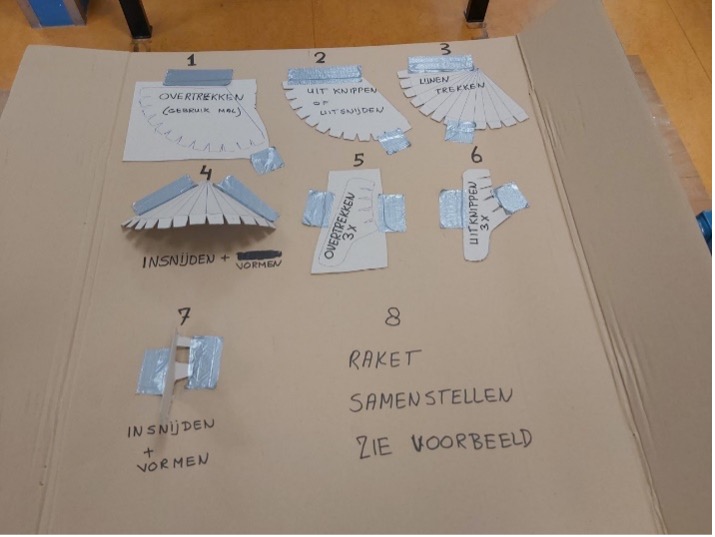
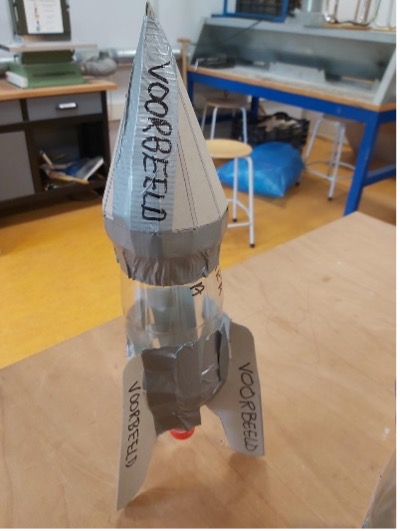
- Cut cardboard fins and nose cones.
- Attach fins and nose cone to the Coca-Cola bottle using tape and glue.
- Allow students to decorate their rockets using paints, markers, and other materials (10 minutes)
Preparing for Launch (10 minutes)
- Demonstrate how to fill the bottle with water (about one-third full).
- Show how to attach the bottle to the launch pad.
- Ensure safety precautions are understood.
Launch Procedures (40 minutes)
- Launch two rockets simultaneously for each turn.
- Allow each group to have a turn.
- Measure and record the height and speed of each launch.
- Encourage students to cheer for their classmates and discuss the results.
- Wrap-up & Reflection
Discussion, conclusion and Reflection (10 minutes)
- Discuss what happened during the launches.
- Ask students what they learned about pressure, forces, and teamwork.
- Reflect on what could be improved for future launches.
Cleanup and Organizing (10 minutes)
- Ensure all materials are collected and the area is cleaned up.
- Store reusable materials for future projects.
- Photo Gallery
- Extension Activities
Related and supporting activities/modules
Assessment:
- Participation and teamwork during the activity.
- Creativity and effort in rocket design and decoration.
- Understanding of scientific principles as demonstrated during discussion and reflection.
Extension Activities:
- Research and present on different types of rockets used in space exploration.
- Write a short essay or draw a picture of their favourite part of the activity.
- Additional Resources
- Building plan for rocket
- Building plan for launch pad.
- Video of the rocket launching
Additional Resources
- Building plan for rocket
- Building plan for launch pad.
- Video of the rocket launching
- Download Files